By Rio Fernandes (Lower Elwha Klallam)
Director of Civic Engagement, National Urban Indian Family Coalition
With less than a month until Election Day, the NUIFC is thrilled to bring back the Democracy is Indigenous newsletter for the 2026 midterms! We'll share updates from across Urban Indian America and highlight our cohort's outstanding work as they work around the clock to remind the country that Democracy is Indigenous!
In this issue:
Empowering Voters Across North Dakota
.In North Dakota, the Sacred Pipe Resource Center wants to reframe how Natives view civic engagement. The focus will be on empowerment, community, and seeing voting as a chance to assert Native power and sovereignty.
"We've been talking about raiding parties, war parties, voting parties as terminology that gets people to think about going to vote together," says Cheryl Ann Kary (Hunkuotawin), Sacred Pipe's Executive Director. "This is in response to that feeling that voter restrictions and voter suppression are coming, especially at the federal level.
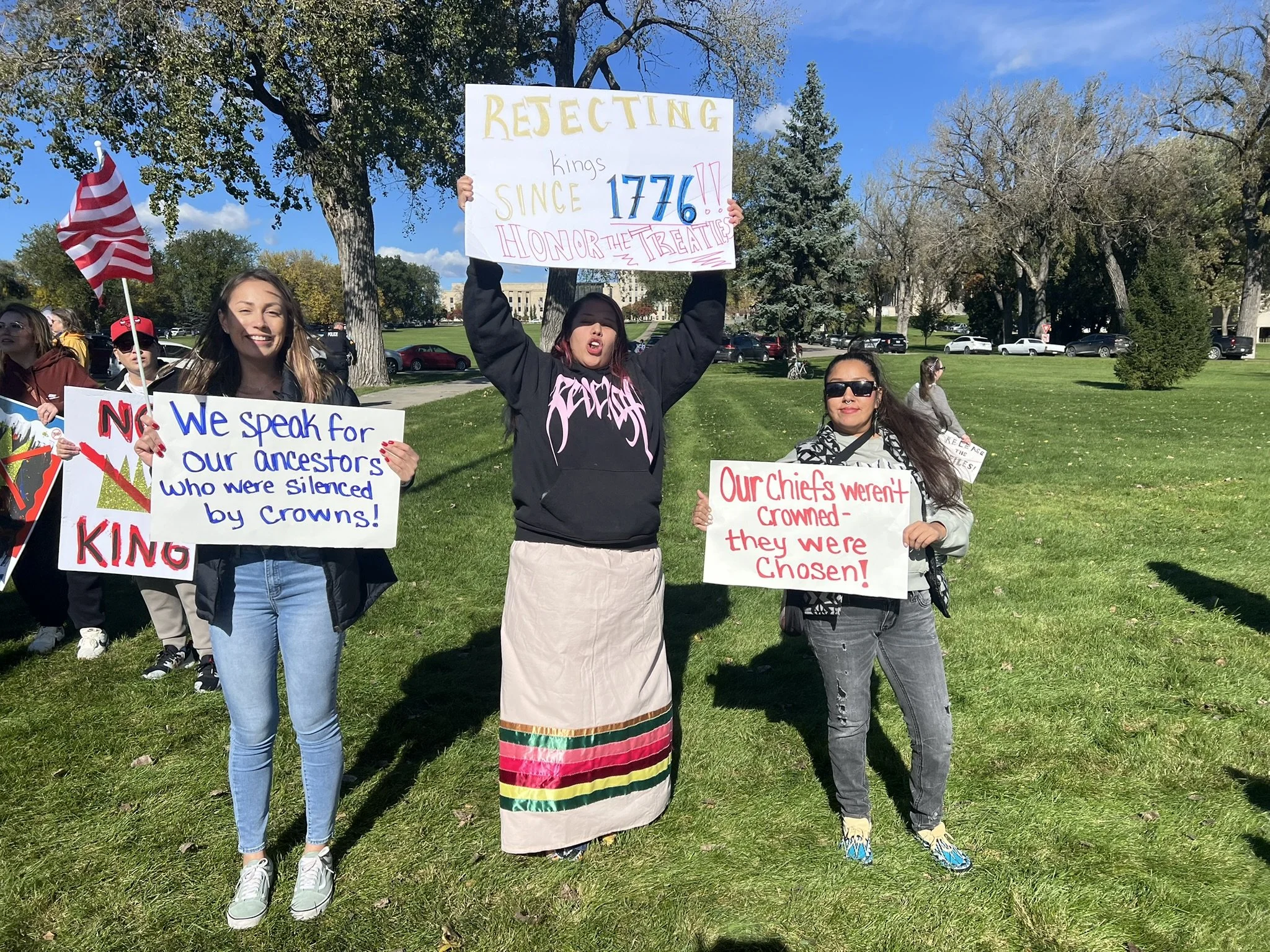
This sense of community and making voting feel special is best exemplified by Sacred Pipe's "Vote In Style," which rents cars and encourages people to dress up and go to the polls together. This reinforces the idea that voting is a special event worth celebrating.
As people arrive at the polls, Native volunteers recruited by Sacred Pipe will greet them. This Native presence at the polls will help people feel welcome. Sacred Pipe is also supplying poll workers with photos of different tribal IDs so they are prepared for which forms of identification people may present.
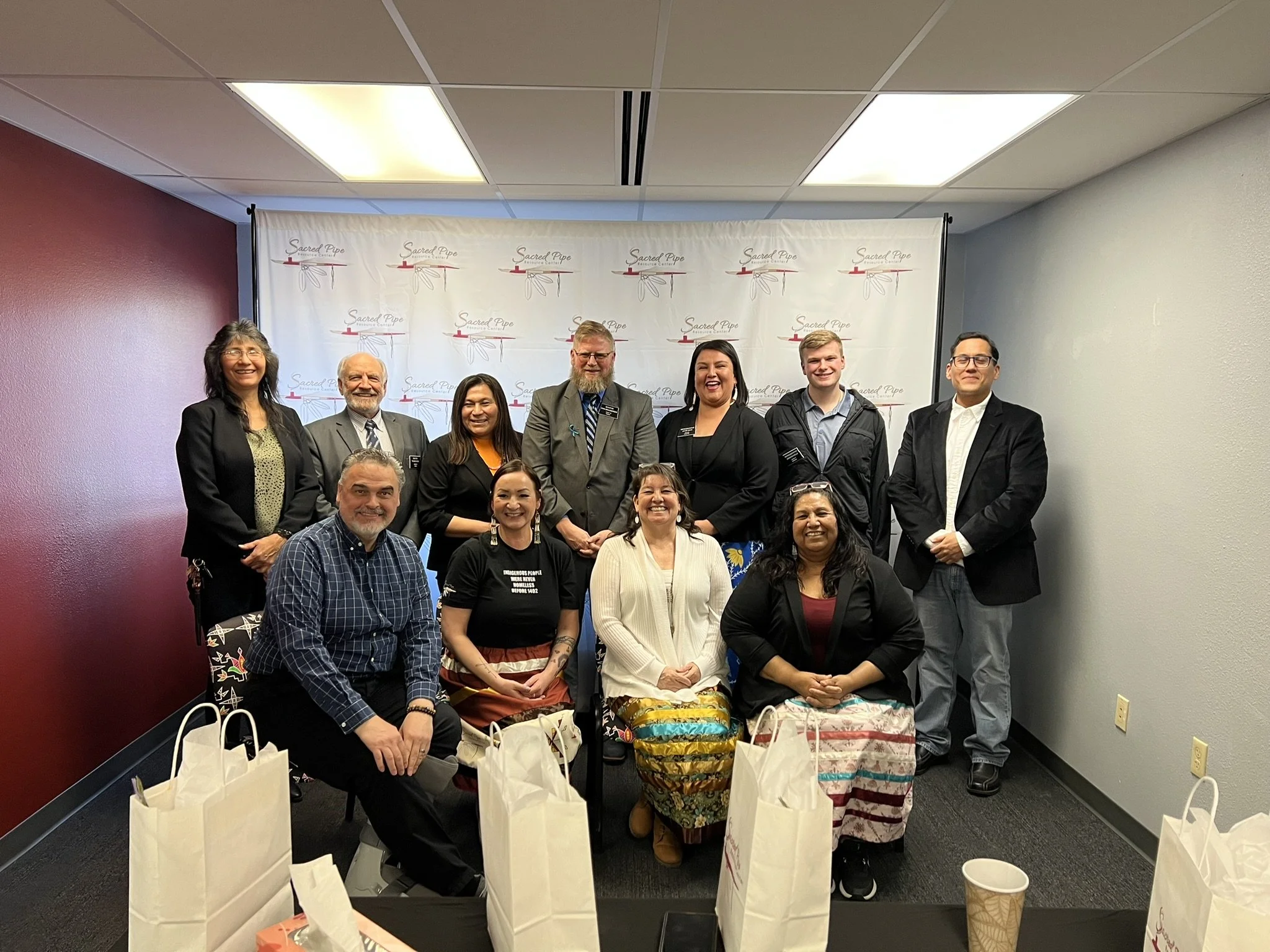
Sacred Pipe is also bringing back its civic engagement bingo nights, which help people learn what is on the ballot and why voting matters.
This year, North Dakotans are voting on a constitutional amendment that Sacred Pipe helped push onto the ballot. If enacted, Measure 2 would provide free breakfast and lunch to North Dakota K-12 students at no cost to the student. Lawmakers would fund it through earnings from the state Legacy Fund if they do not identify an alternative funding source. Sacred Pipe is using this measure to show how much impact elections can have.
"We know Native students are disproportionately affected by negative school lunch balances," says Kary. "The Native vote can make the difference here. We want to use this as another reason people should come out and vote."
The Art of Saving Democracy in the Twin Cities
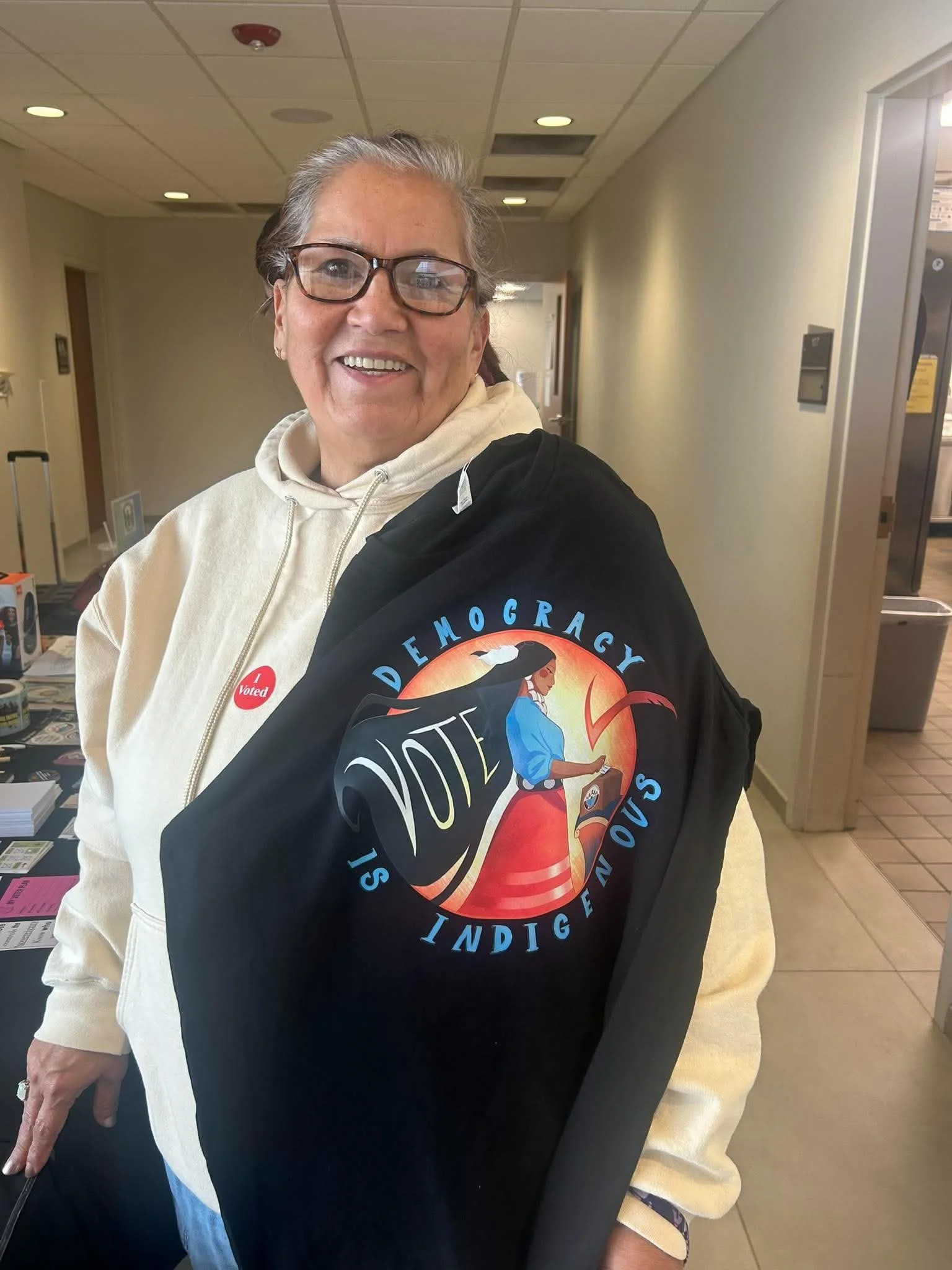
In New Mexico, the Santa Fe Indigenous Center is bringing its civic engagement work to a college campus, partnering with the Institute of American Indian Arts to reach new voters. They've hosted tabling events, bringing DII merchandise, newly made SFIC-specific swag, and food, and speaking with hundreds of people about the upcoming election.
"This is collaboration we've been fostering for three years," says Tammie Touchine (Diné), SFIC's Special Projects Coordinator. "We bring voter registers out to the school and get them signed up right then and there."
SFIC is also planning a large Indigenous Peoples' Day event, hosting its 4th annual 'Honoring Native Nations' Powwow. They've been recruiting artists for the event and helping them set up booths at Santa Fe Plaza. They'll speak with attendees about the importance of the upcoming election and hand out new swag.
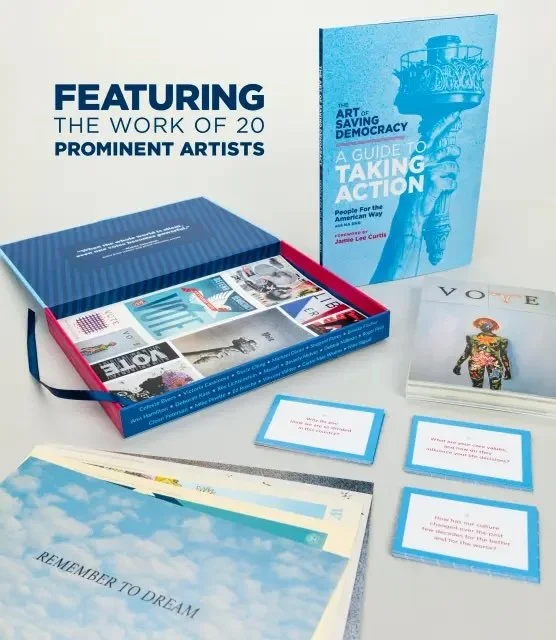
Photo Credit: Hachette Book Group
"Everything in here, all the conversation starters and artwork, gives people something to share or helps them start conversations about why voting is important to our people," says Jolene Jones (Ojibwe), NACDI's Make Voting a Tradition Manager. "We love everything in these kits."
Beyond the toolkits, NACDI will be working closely with American Indian OIC and the Indian Health Board to register voters. They've also published a civic engagement zine featuring local Minnesota artists that captures how voting can keep Minneapolis safe.
This election cycle, a big focus is early voting, which lets people cast their ballots before Election Day. This will help reduce stress and let community members avoid lines and other challenges on November 3rd.
"With everything that's happened in Minneapolis the last year, our goal is to get people out early," says Jones. "We don't know if ICE is coming back, or if we need people on the front lines. It's an empowering message to get out early and have your voice heard for the community."
Bringing Together Urban Natives in las Vegas
For the Las Vegas Indian Center, civic engagement is about bringing people together for a fun time and letting Democracy is Indigenous work flow from there. For example, they hosted a "Ride the Vote" event, featuring motorcycle clubs that visited the center and rode through the community to draw attention to LVIC and its work.
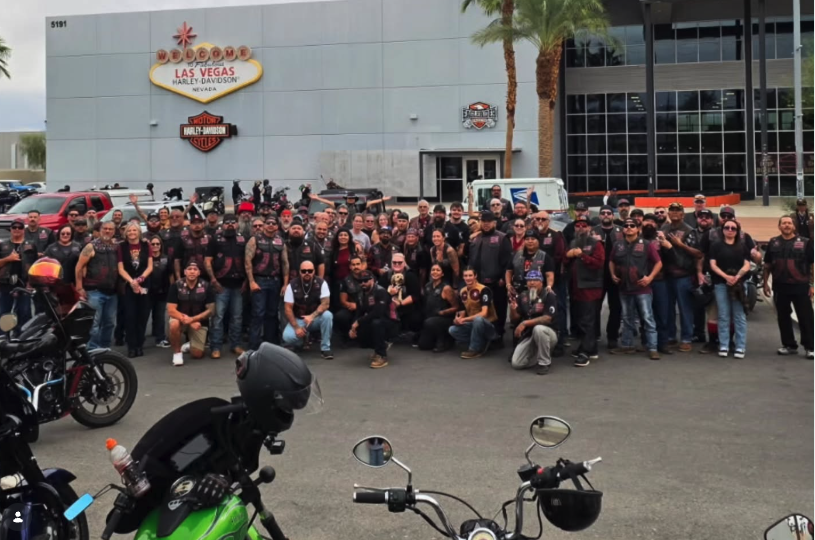
"Las Vegas Indian Center is the gap between civic engagement and the community," says Davis Huskon (Navajo), the Civic Engagement Coordinator at the Las Vegas Indian Center. "We want people to know that we as Native people need to push our voices to be heard across many nations. Our future generations depend on us to use our voices for the betterment of our people."
Building off that event, LVIC will host a "Taco About Voting" event where people can enjoy delicious tacos. They can register to vote, update their registration, or sign up for election reminders. Afterward, they'll review the biggest races on the ballot so people are ready when ballots arrive, since Nevada is a vote-by-mail state.
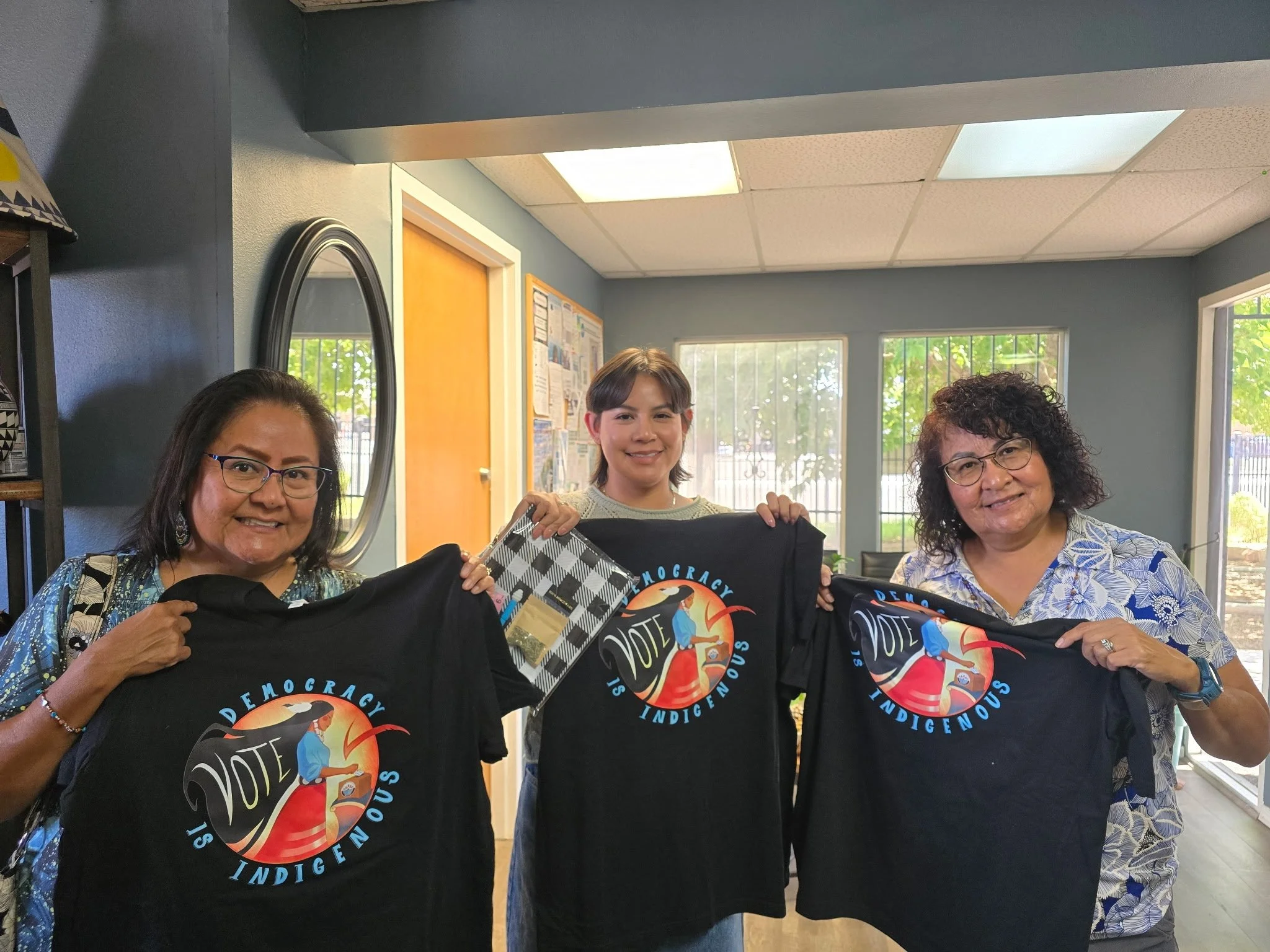
To build excitement around the election, Las Vegas Indian Center will also host a concert, bringing together local artists to sing and remind people about the election. Music is a big theme of their work, as they see it as a way to get people in the door because it resonates across age groups.
"We want to connect with people and let them know to come out and vote so they can choose our future leaders," says Huskon. "It's about helping people know where they can vote and whom they're voting for. Especially for those from the tribes, it's easy to feel disconnected; we want to fix that."