By Rio Fernandes (Lower Elwha Klallam)
Director of Civic Engagement, National Urban Indian Family Coalition
With less than a month until Election Day, the NUIFC is thrilled to bring back the Democracy is Indigenous newsletter for the 2026 midterms! We'll share updates from across Urban Indian America and highlight our cohort's outstanding work as they work around the clock to remind the country that Democracy is Indigenous!
In this issue:
Rock The Native Brings Music to The Ballot Box
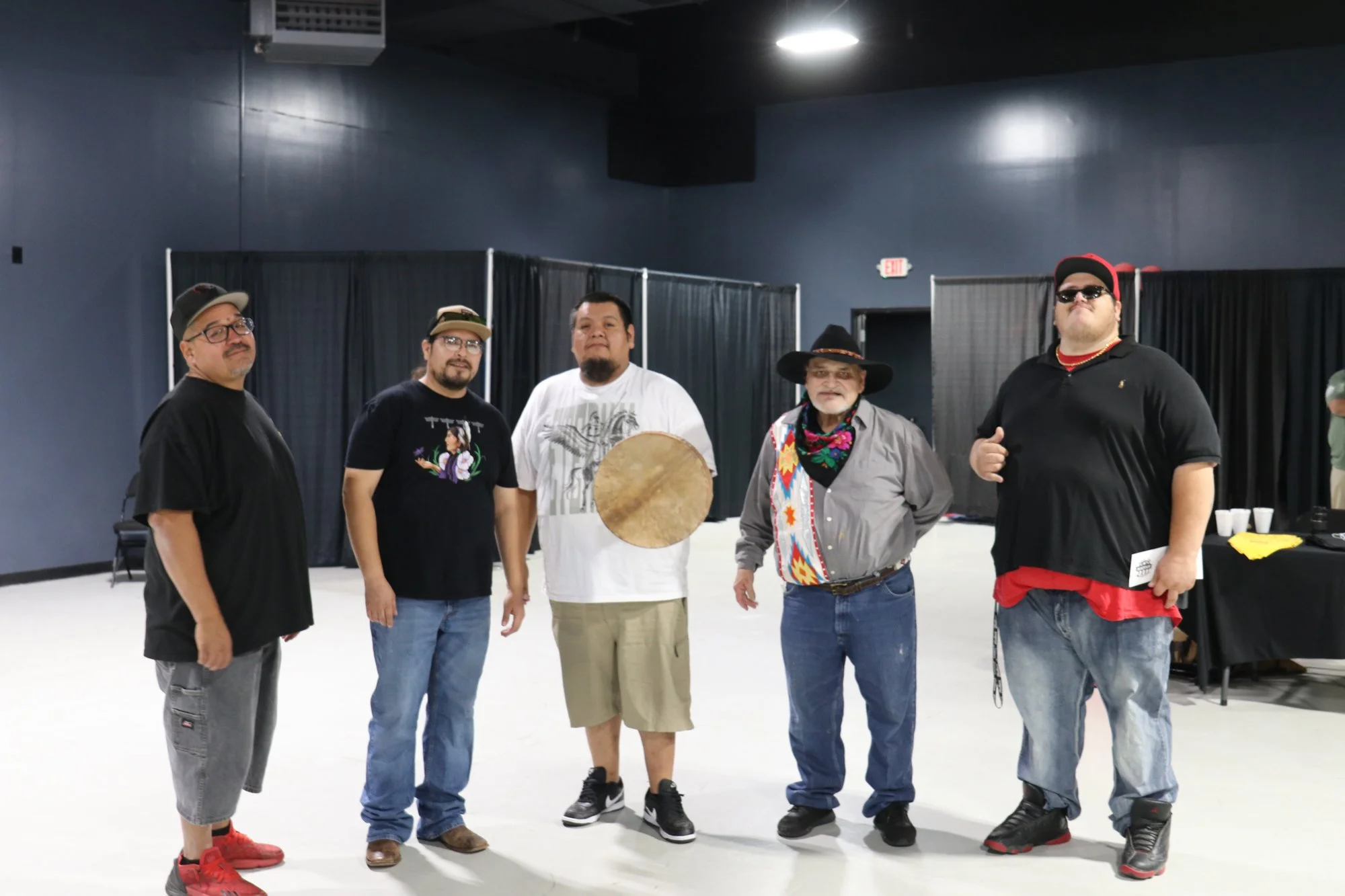
Making civic engagement impactful means bringing people out for something fun, and no one does that better than Rock the Native Vote in Oklahoma City, which lives up to its name by mixing music, celebration, and voting. Recently, they hosted their 'Battle of the Drums', a winner-take-all competition for men's drum groups, with a $500 cash prize for the winner and a handmade hand drum.
"Battle of the Drums gives us an opportunity to celebrate our community and our culture while making sure people have the information they need to participate in the upcoming election," says Ginny Underwood (Comanche), RNV's Executive Director. "We are trying to build community and find ways to make this work fun and inclusive."
Beyond the music, Rock the Native Vote is also planning community events. They've hosted block parties in Oklahoma City and Tulsa with live DJs, cornhole tournaments, and watch parties for Oklahoma Sooners games. They also host events celebrating the Indian Citizenship Act, bringing the community together to celebrate the landmark achievement and emphasize the importance of voting.
Rock the Native Vote will also host early voting events to help people use that option. Early voting is vital in Oklahoma because it lets people come out together and vote at a dedicated location instead of searching for their local polling place on Election Day.
This work is critical in Oklahoma, which has seen stubbornly low voter turnout numbers for countless elections. Still, while this trend is frustrating, Rock the Native vote remains steadfast in its ability to effect change and shift the state's narrative.
"We know that voter registration is just the tip of the iceberg to making change in Oklahoma," says Underwood. "We are looking at the systemic challenges that keep voter turnout low; we are building out systems and being more purposeful about how we focus on connecting with people and converting that into action."
Higher Education Connects New Voters in Santa Fe
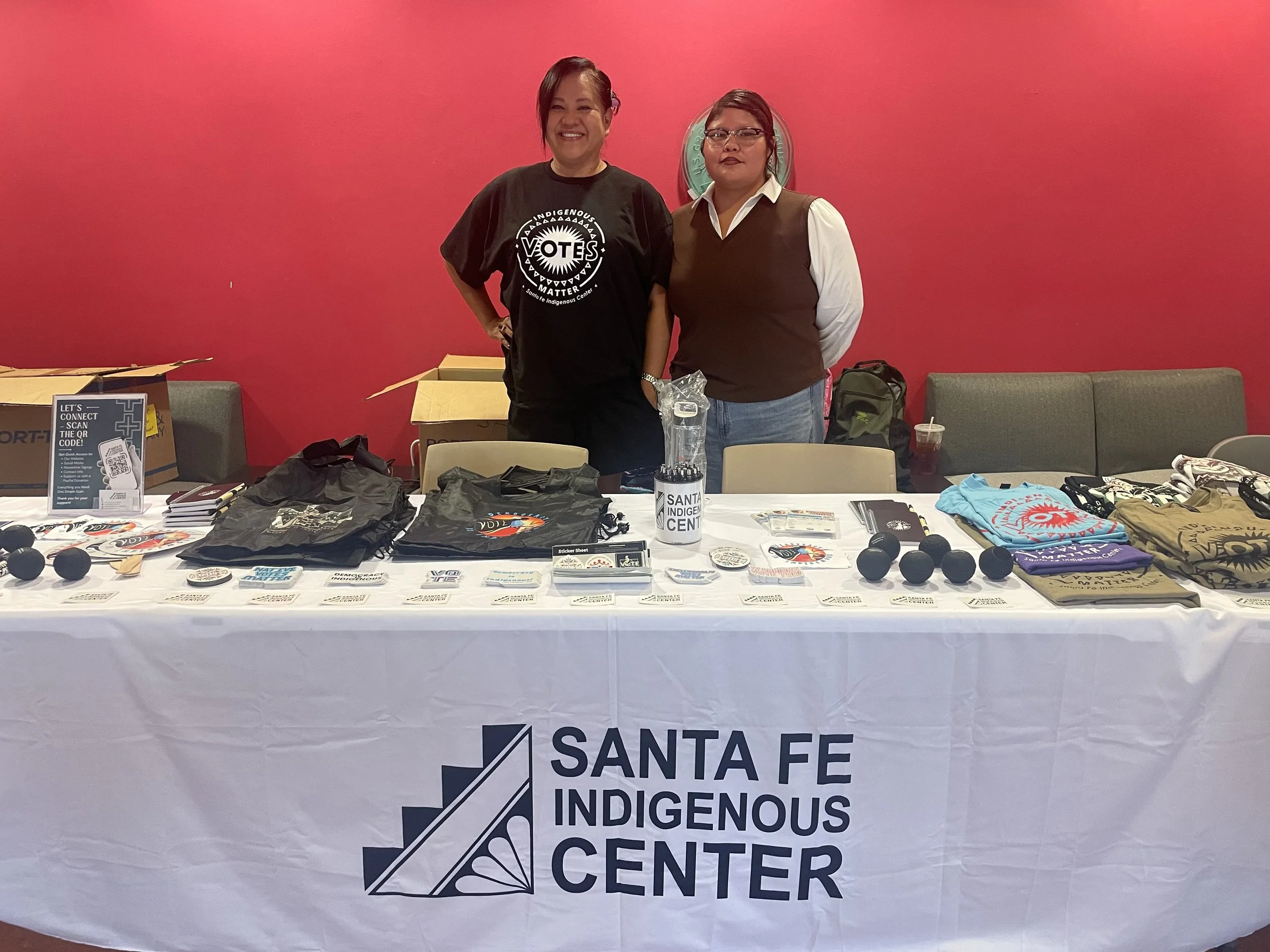
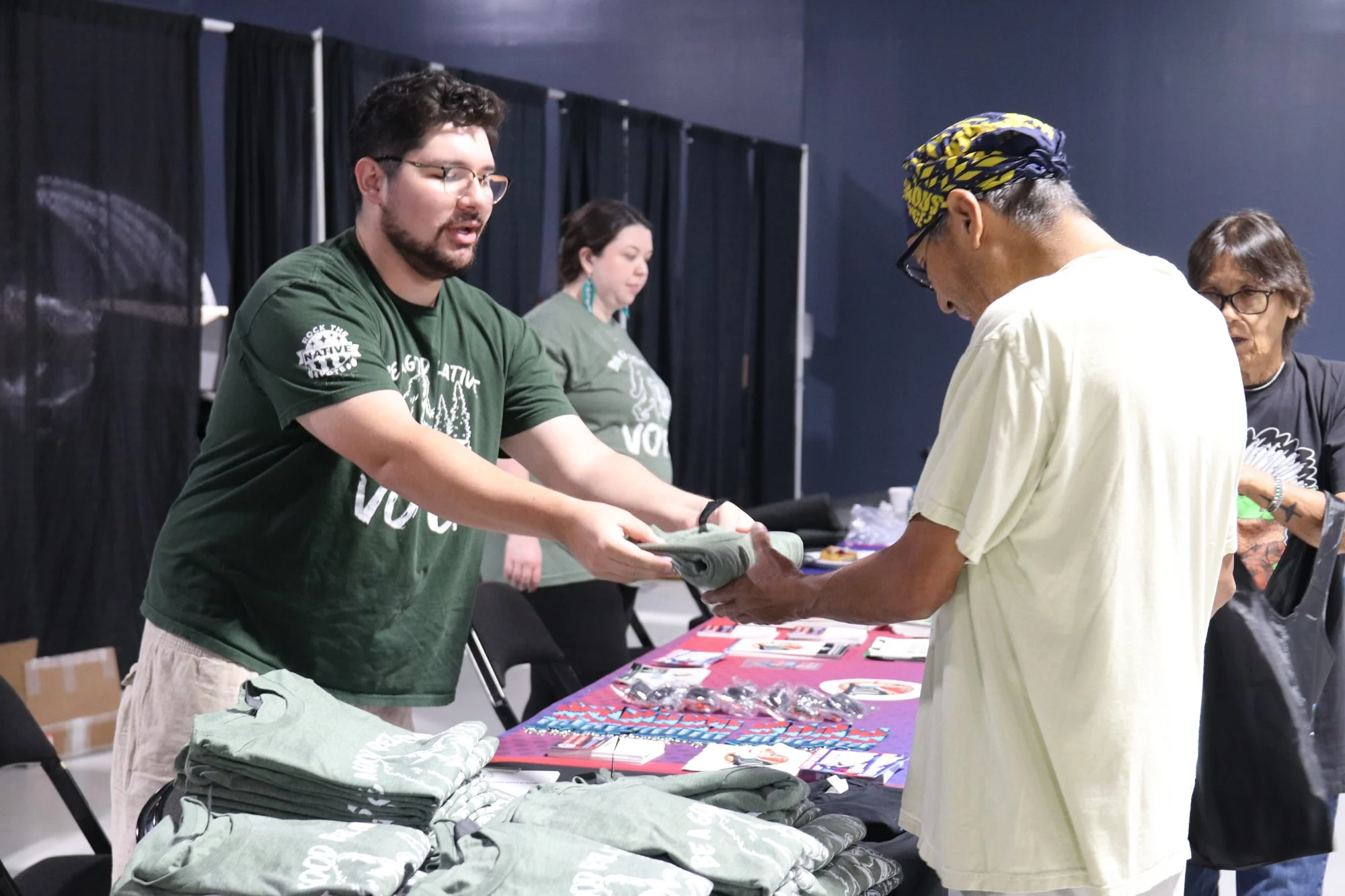
In New Mexico, the Santa Fe Indigenous Center is bringing its civic engagement work to a college campus, partnering with the Institute of American Indian Arts to reach new voters. They've hosted tabling events, bringing DII merchandise, newly made SFIC-specific swag, and food, and speaking with hundreds of people about the upcoming election.
"This is collaboration we've been fostering for three years," says Tammie Touchine (Diné), SFIC's Special Projects Coordinator. "We bring voter registers out to the school and get them signed up right then and there."
SFIC is also planning a large Indigenous Peoples' Day event, hosting its 4th annual 'Honoring Native Nations' Powwow. They've been recruiting artists for the event and helping them set up booths at Santa Fe Plaza. They'll speak with attendees about the importance of the upcoming election and hand out new swag.
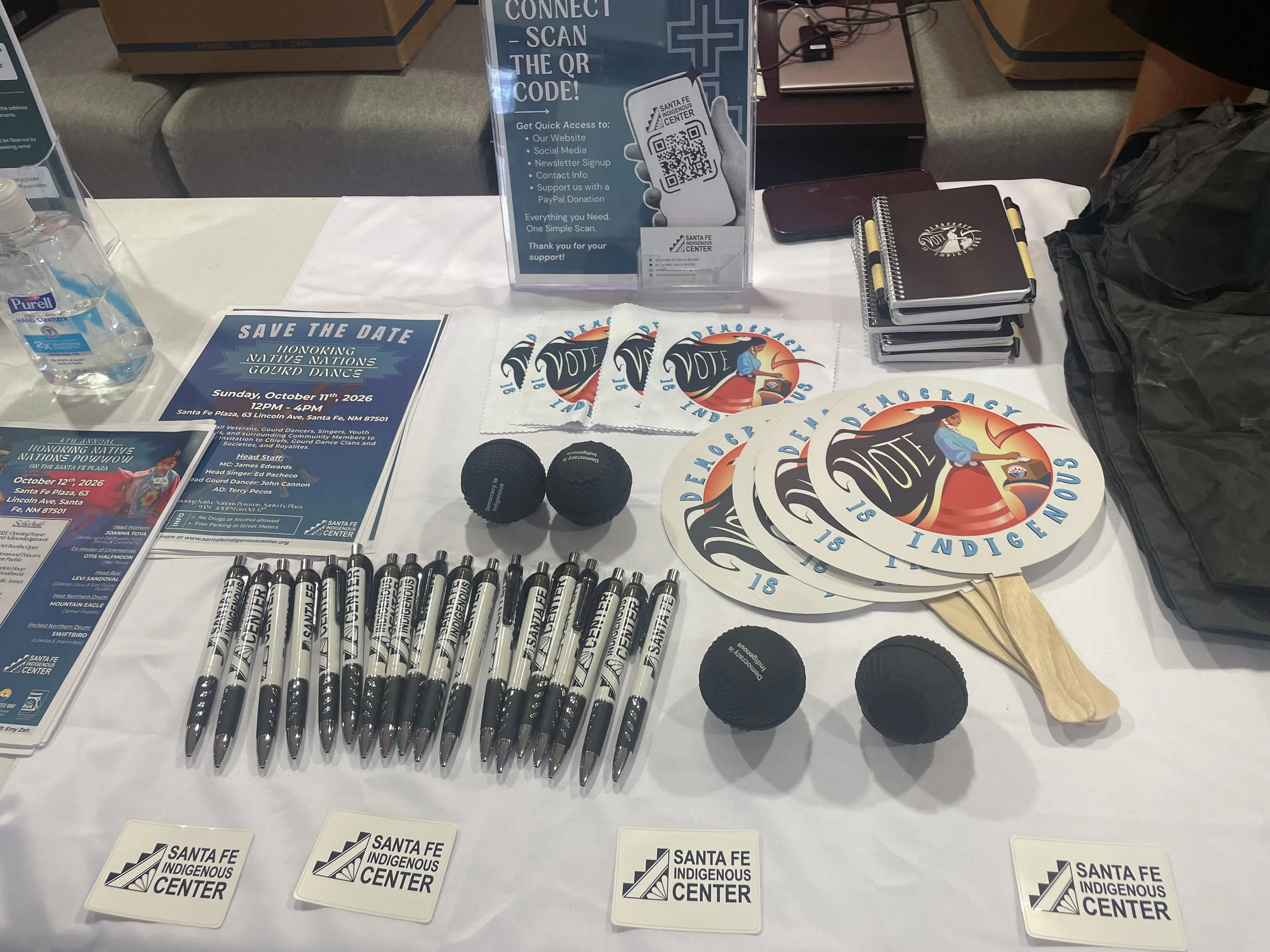
This new swag is inspired by a community vote taken at SFIC's Women's Brunch. They polled a few ideas and themes before selecting "Indigenous Voices Matter" and created a range of T-shirts, tickets, and other items to complement the NUIFC's DII materials.
Alongside these events, SFIC plans to host a candidate forum, inviting Native candidates from across the state to speak with their communities. They've also been helping people attending their popular food bank programs register to vote.
The energy in New Mexico is palpable, with many people talking about the gubernatorial race, which features Deb Haaland, who has a strong chance to become the first Native woman elected Governor in the country.
Civic Engagement Work Across State Lines
For the Kansas City Indian Center (KCIC), serving the urban Native community means keeping up with news in two states: Kansas and Missouri. Visitors to the center can live in either state, so accurate information is critical, especially for civic engagement work.
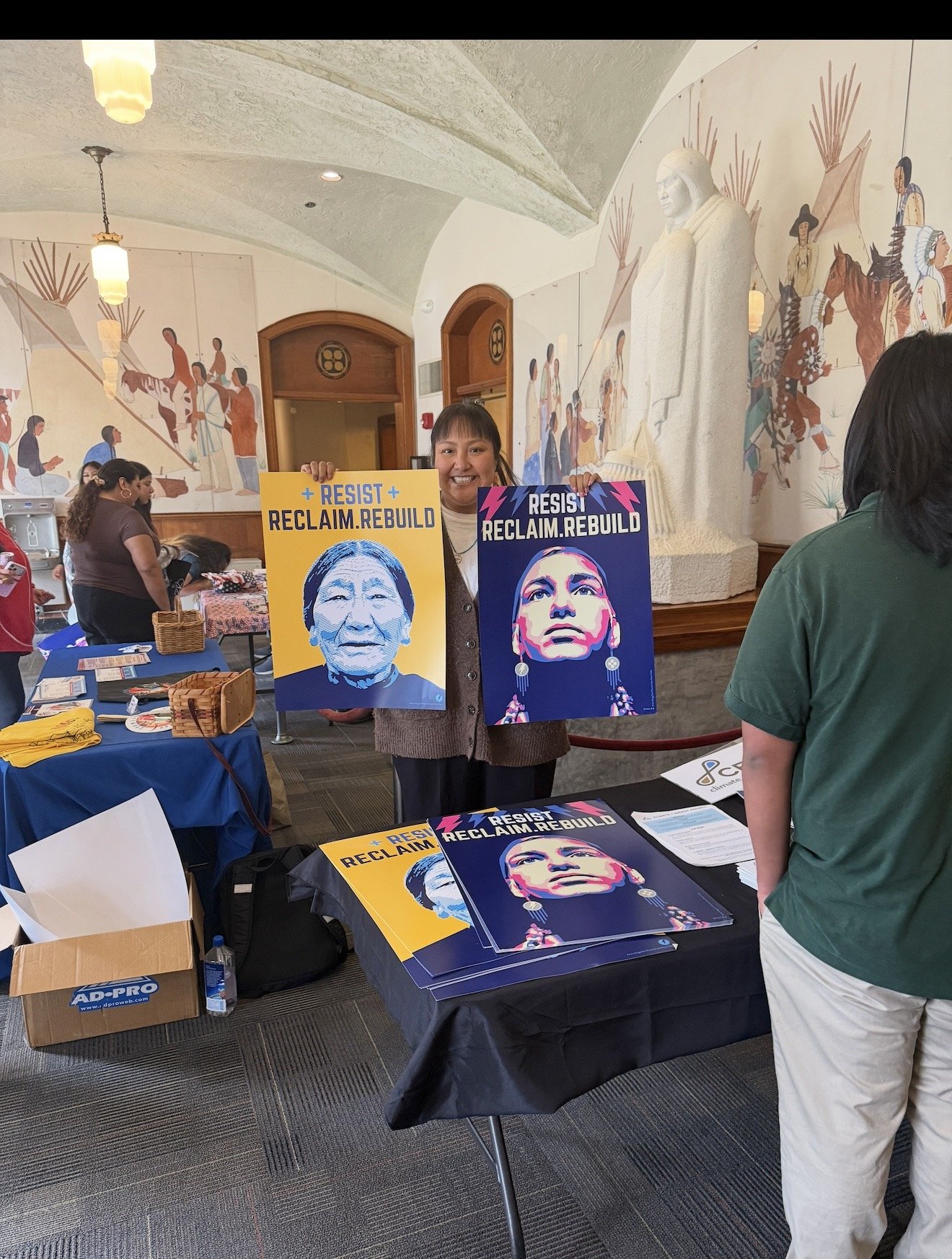
"We are a small nonprofit, but we are mighty," says D'Arlyn Bell (Cherokee), KCIC's Director of Civic Engagement. "We have people who can't vote because they move and don't update their ID. People are often moving from Kansas to Missouri and vice versa, so we are working closely to make sure they're going to the DMV and updating their registration and are ready to go."
To support this, KCIC recently conducted a community survey to learn more about people's feelings about the election, refine its messaging, and identify roadblocks to voting. This informed their purchase of bus ads, outreach to youth about how policy affects them, and the creation of an Elder Group.
This targeted approach also led KCIC to several local colleges. They'll work with a video production class at the University of Kansas to create a series of social media reels and shorts highlighting the importance of the election. They'll also work at Haskell Indian Nations University to create a civic engagement seminar that educates students about the importance of elections and the policies that stem from them.
At the end of the month, they'll also be hosting a large Halloween event that helps people learn about their state's early voting and helps them cast their ballots before election day.
KCIC is also running a large storytelling project, collecting interviews with KC residents from all walks of life to ask about their experiences as urban Natives, what that means to them, and why they're going to vote in the upcoming election.
This series, along with the work being done at the University of Kansas, will be the backbone of their digital outreach
"We want to use this storytelling project to let people share their native experience in a city," says Bell. "We have hours of interviews of people sharing their values and how they connect with their culture in Kansas City."
Having a Seat At The Table in The Pacific Northwest
One of the leading nonprofits in the Portland metro area, the Native American Youth and Family Center (NAYA) is proving how powerful Democracy is Indigenous work can be. Through its work, the urban Native community is making decisions and pushing for policy with allies and relationships it has built over decades.
"We know we can get our community members out, and it shows elected officials there are numbers, coordination, and a will to organize," says Oscar Arana (Chichimeca), NAYA's CEO. "It's a reciprocal relationship. We can have conversations about our priorities, and they can learn who our communities are as we work together to move forward on good policy."
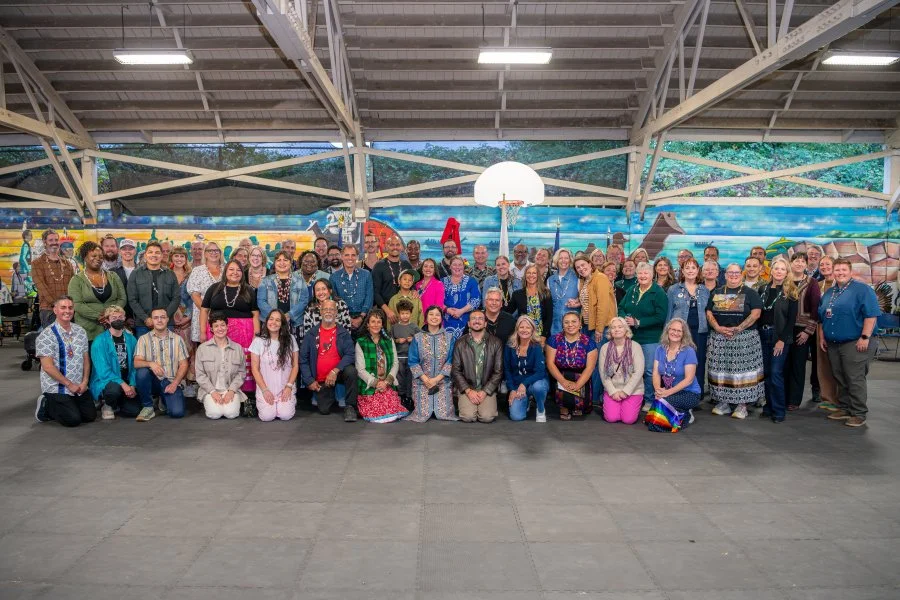
NAYA highlighted this power when Metro, the regional government for the greater Portland area, announced a new committee composed of elected officials and community members. After reviewing the members, NAYA realized the committee needed someone with experience serving the Native community, and worked with their elected official allies to update the committee's creation rules to address that. Now, the committee requires someone with that experience to serve, showing how NAYA can push for outcomes that support their communities.
NAYA also hosts Pow-Wows in the city, which draw elected officials who know they can engage with the community they aspire to represent. For example, Congresswoman Maxine Dexter will roll up her sleeves and help NAYA serve community meals to its elders.
"We're giving these candidates a chance to meet people and show they want to take steps to build authentic relationships with Natives," says Arana.
NAYA also helps people navigate their ballot because Multnomah County uses ranked-choice voting. Only a few places in the country use this, so it's important to help people understand that they can rank candidates in order of preference: first, second, third, and so on. If your first choice can’t win, your ballot counts for your next choice.
NAYA continues to use its power and civic engagement expertise to support Portland's urban Native community.