
democracy is indigenous
Resources follow policy & policy follows elections
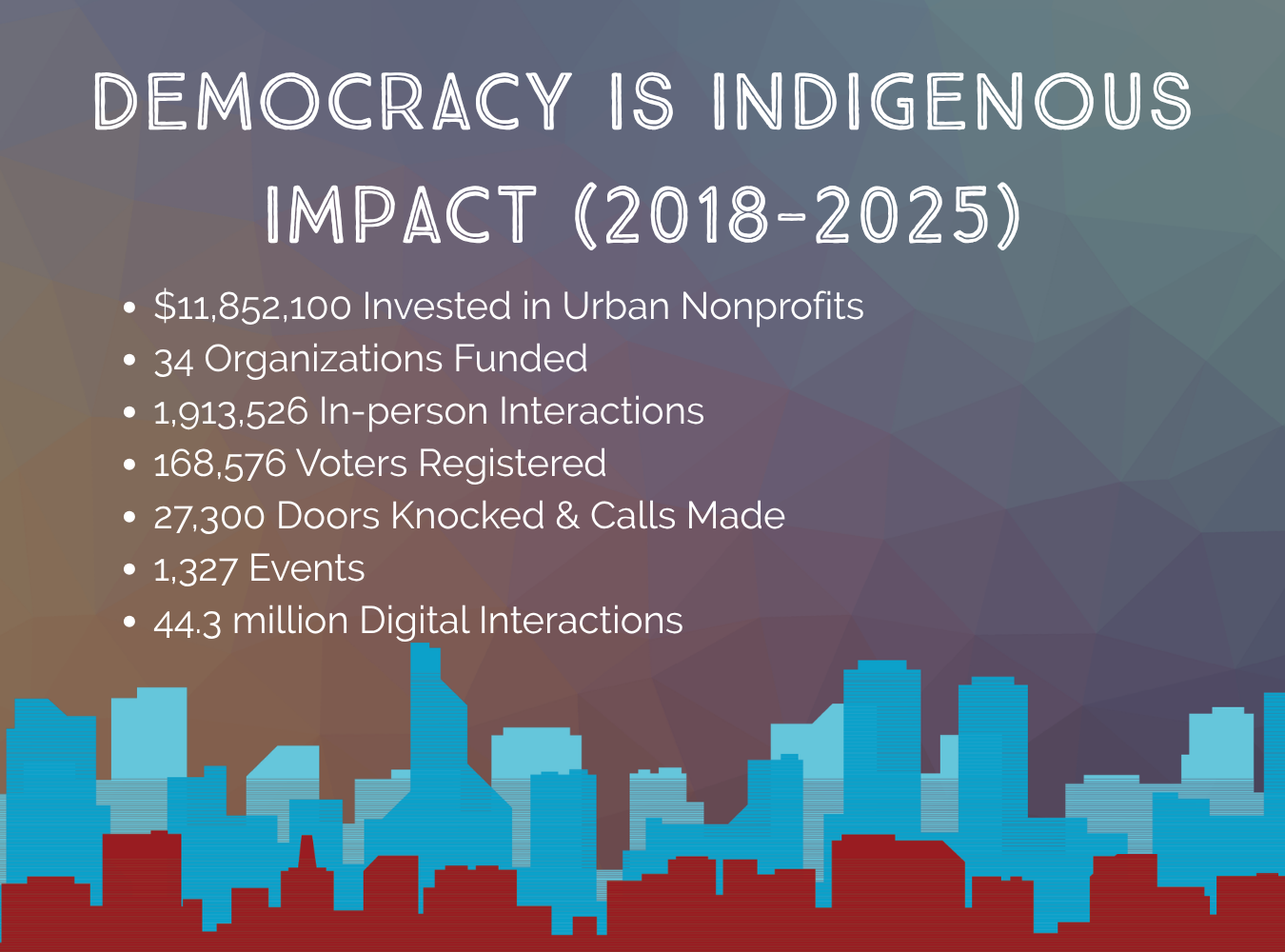
As the nation's only urban Native focused civic engagement initiative, the NUIFC's Democracy is Indigenous invests directly in urban Indian nonprofits to ensure voices are heard. We know that resources follow policy and that policy follows elections, so we've committed to building a powerful cohort of organizations that advocate for the needs of our communities. This work goes beyond voter registration; we focus on creating sustainable year-round efforts that empower people to see that civic engagement goes beyond Election Day.
Since launching in 2018, we've invested nearly $12 million in urban Native 501(c)(3)s and have seen transformative results for these organizations that go beyond improved voter turnout numbers. Each member of this cohort has deep community roots and can use their role as a trusted messenger to find voters that traditional GOTV campaigns overlook. It's this support to the organizations on the ground that makes DII so successful.
our impact
Want to learn more about how our Democracy is Indigenous Cohort is making an impact around the country?
Check out our DII Impact Report
NUIFC Organizational Resources
As the NUIFC continues its work to provide resources to our Democracy is Indigenous Cohort, we are thrilled to work with Native artists and other non-profit organizations to create a library of different tools to help engage Native voters. This includes different swag packages, posters, artwork, and a dedicated voter registration portal.
We are thrilled to have these items shared with urban Native communities around the country and are continuing to explore other ways to better support these urban Indian non-profits.
As proud as we are of the work that we've done, our focus remains looking forward to the next election and to continue to remind people just how much power the urban Native vote has. No other national civic engagement effort is able to connect with Natives who live off-reservation, which make up more than 70 percent of the total American Indian/Alaska Native Population.
Community Forums
Powwows
Halloween Parties
Art Competitions
Visited College Campuses
Indigenous People Day Events
Civic Engagement Bingo
Radio Advertisements
What does this look like?
Photo Contests
GOTV Information on Billboards
Outdoor Movie Nights
Music Concerts
Phone Banking
Public Service Announcements
Town Halls
Early Voting Parties
Podcast Interviews and Explainers
Transit Advertisements
Tailgate & Sporting Events
Community Raffles & Giveaways
Taco-About Voting Event
Voter Education Events
Ballot Parties
COALITION MEMBERS
The NUIFC is honored and excited to have the following organizations as part of the 2026 Democracy is Indigenous Cohort.
Each of the organizations receives a range of funding, depending upon their size and capacity, and works collaboratively toward shared metrics aimed at increasing voter registration, engagement, and turnout. The NUIFC continues to cultivate support for this initiative with hopes of expanding funding sources and increasing investments directed to the participating organizations.