Hunger As a Weapon: The Reduction of SNAP Benefits and The Importance of Native Food Sovereignty
By Janeen Comenote (Quinault/ Hesquiaht/ Oglala)
Executive Director, National Urban Indian Family Coalition
American Indian and Alaska Native households have experienced food insecurity at roughly double, and at times triple, the rate of white households for the past two decades. Native households also participate in SNAP at nearly double the rate of the general population, reflecting how many families rely on the program to get by. For urban Native families in particular, reliance on SNAP isn’t abstract. It shows up in kitchens, in grocery aisles, and in the choices families make every month to stretch what little they have.
“Food access isn’t a talking point for Native people. It’s survival knowledge passed down through generations. When we invest in Native-led food systems, we’re not just filling a gap; we’re restoring something that was systematically and intentionally taken by design,” says Janeen Comenote, Executive Director of the National Urban Indian Family Coalition.
Reducing SNAP benefits for families who are already struggling raises real ethical questions, and it also fails to make economic sense for taxpayers. When hungry people know where their next meal will come from, they’re better equipped to make sound life choices, look for a job, support their families, and become more integrated members of their community. SNAP costs money to run, but that’s far less than what communities pay when food insecurity goes unaddressed: increased emergency room visits, missed work and school, and higher long-term healthcare costs, to name a few.
A Question of Priorities, Not a Shortage of Food
America has a surplus of food, which includes organized systems that distribute food to people who need it most. SNAP is one of the most cost-effective ways to help vulnerable people and communities, one that has long-term payouts that far outweigh any short-term political gain.
When SNAP benefits are cut or lapse, vulnerable communities are rocked by the instability that follows. Strong, self-sustaining communities benefit everyone, and food security is foundational to that strength.
Hunger Creates Crisis, Not Clarity
Hunger does not motivate people out of poverty. Long-term studies show that hunger deeply affects a person’s ability to think clearly, stay healthy, or make good decisions. Now scale the problem of hunger out to communities in need and you have a crisis on your hands.
Policies that treat food access as a lever, rather than a basic need, overlook what research shows to be true; hunger impacts health, decision-making, and a family’s ability to stay on stable footing.
Native Communities Recognize the Pattern
Native people are uniquely positioned to recognize a pattern in federal policy where access to food has, at times, been used as a tool of control rather than as a guaranteed right. In recent history, the government brutally forced many tribes off their lands to far away reservations, which were often too small or desolate to sustain our basic needs, our ability to hunt or grow food, or have fresh water. Native people who survived the long marches faced extreme hunger on the journey and when they reached their destination, many got sick, many starved, and many died as a result. Government rations often made people sick and were in short supply. It was an organized effort across generations, designed to dispossess the tribes of our land, power, and resources. That history shapes how we understand policy decisions that put access to food at risk today.
When we say that food sovereignty matters for Native people in particular, it is not some philosophical idea – it’s a knowledge that lives in our immediate lived history. We do not see food as a luxury or a political tool to be wielded, but a basic human right; one that Native people deeply understand.
When we say that food sovereignty matters for Native people in particular, it is not some philosophical idea – it’s a knowledge that lives in our immediate lived history. We do not see food as a luxury or a political tool to be wielded, but a basic human right; one that Native people deeply understand.
The Policy Picture
This year, the federal government moved to tighten eligibility and cut funding for SNAP, Medicaid, and WIC. For Native people, that is not a distant policy debate. It is felt immediately, in every state where our network serves urban Native families. Across the 25 states where our members work, we are already seeing what these changes look like on the ground: families losing coverage they have relied on for years, longer waits at already-stretched clinics, and extreme pressure on food pantries and nonprofits that were never built to be the only safety nets left standing. Food security sits at the center of our policy agenda this year because our communities cannot afford for it to sit anywhere else.
The Importance of Native Food Sovereignty. A Closer Look.
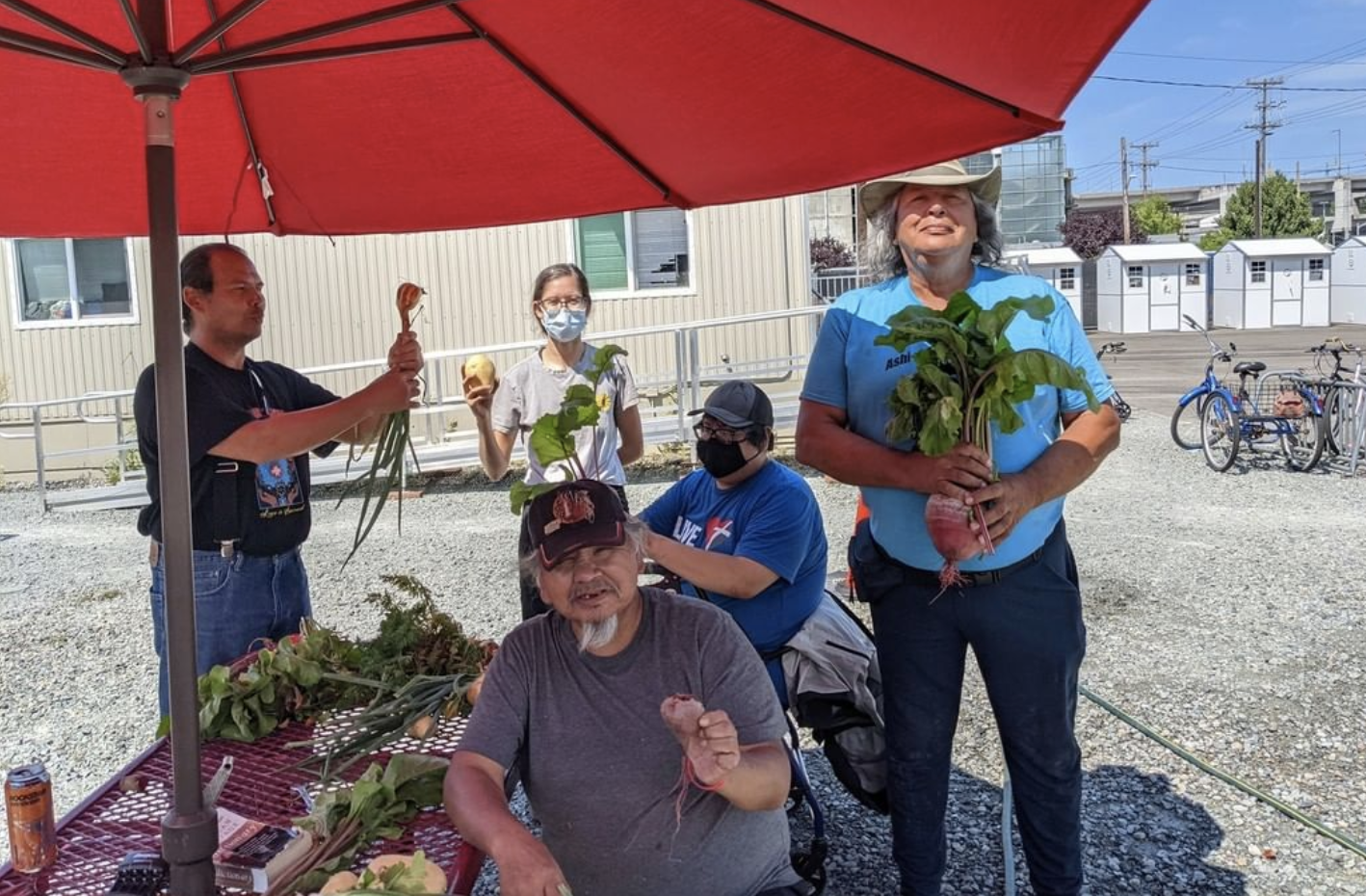
I recently had the opportunity to talk about the importance of Native food sovereignty with Liana Levay, (Anishinaabe Ojibwe). Liana is the Community Food Coordinator of the Native American Youth and Family Center (NAYA), one of the nonprofits that NUIFC supports.
“NAYA has had a food pantry for decades,” says Liana. “Beyond direct food distribution, we work to make sure food reaches our community through several connected programs, including our Family Shelter, Affordable Housing properties, Early Childhood programs, among many others. Our food boxes support participants across every stage of life, from infants to our Elders, so we try to make sure what we offer is appropriate and nourishing for each of those groups.
Culturally focused food banks and pantries matter because they're often one of the few places where food, culture, and trust intersect for our community. A few reasons why the Native American population can be more vulnerable than other food bank users involves the importance of first foods, established trust and being culturally responsive.”
First Foods are our traditional and first foods (salmon, roots, berries, game). They carry cultural and spiritual significance beyond nutrition. When these aren't accessible, it's not just a dietary gap, it's a disconnection from culture and identity.”
Established trust is important as well. Native communities have a long history of mistreatment by mainstream institutions, so pantries run by and for Native people build a level of trust that outside organizations often can't. That trust means people are more likely to actually come in and accept help.”
Culturally responsive foods, means that specific kinds of food reflects our community's preferences, traditions, and health needs. (Many Native communities face higher rates of diabetes and other diet-related conditions), so a one-size-fits-all pantry model doesn't serve our people well.”
On top of this, many Native families face compounding barriers such as geographic isolation, transportation gaps, and historical/intergenerational food insecurity tied to loss of land and traditional food systems, which can make the need more acute and long-standing than in other populations.”
The Need for Native Food Bank Support
We have seen more people accessing the pantry who wouldn't have thought of themselves as "food bank" households a few years ago, largely driven by the cost of living and inflation,” Liana continues. “There's also been a shift toward wanting more choice and dignity in the process, rather than a pre-packed box that's always the same items, and more interest in culturally specific or traditional foods rather than generic pantry staples. At the same time, stigma hasn't disappeared entirely, and some community members still hesitate to come or even know how accessible support can be.”